
Mark Peplow in Nature:
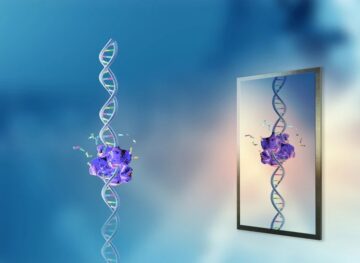 Many of the molecules in our bodies are ‘chiral’ — that is, they take one of two mirror-image forms, like right-handed and left-handed gloves. Proteins are built from left-handed amino acids, and DNA twists like a right-handed screw, for example.
Studying mirror-image versions of such molecules could help to unpick how this handedness emerged, some researchers say. And because the body’s enzymes and immune system might not as readily recognize right-handed amino acids or left-handed DNA, such molecules could resist degradation — making them useful as therapeutic drugs. This approach has already shown clinical success: in 2017, for example, the US Food and Drug Administration approved a small peptide containing mirror-image amino acids, called etelcalcetide, to treat people with chronic kidney disease.
But this ability to evade degradation could be a double-edged sword. If an entire mirror-image cell were ever made, it might proliferate uncontrollably in the body or spread unchecked through the environment, some researchers say.
This is why scientists are meeting in Manchester this week.
More here.
Enjoying the content on 3QD? Help keep us going by donating now.