
Susan Aboeid at The Baffler:
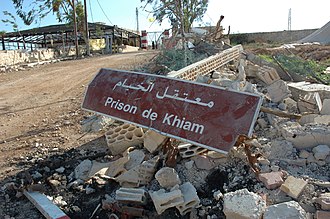 The fall of Syria’s prisons and its regime prompted a wave of thought regarding the very notion of carceral collapse—no longer an aspiration for the oppressed but an inclement reality—throughout the region and diaspora. Palestinian factions debated the implications for the 1,784 Palestinian detainees who disappeared in Assad’s prisons, their fate unknown. On the other hand, Sudanese activists took to X in solidarity, recalling their own scenes of prison liberation in Khartoum in the aftermath of the 2019 revolution that toppled the long-standing dictatorship of Omar al-Bashir. In the United Kingdom, Egyptian activists gathered to reiterate their demands for the release of the over sixty thousand political prisoners in President Abdel Fattah el-Sisi’s prisons, including British Egyptian activist and writer Alaa Abdel Fattah. One former detainee recalled the horrors of Sednaya as “no less horrific” than what he witnessed in Egyptian prisons.
In Khiam and Damascus, the prison is open. But carceral abolition, as imagined and practiced, is not just about breaking chains and opening gates. Prisons across the Middle East and North Africa—including in Syria, Sudan, Egypt, and Palestine—remain the state’s single most effective means of oppression and the physical manifestations of the state’s violent carceral architecture. As such, their abolition not only demands the freedom of all the prisoners but also a complete restructuring of the societies that bred them. In the words of prison abolitionist Ruth Wilson Gilmore, “Abolition requires we change one thing, which is everything.”
more here.
Enjoying the content on 3QD? Help keep us going by donating now.