
Brooke Allen at the Hudson Review:
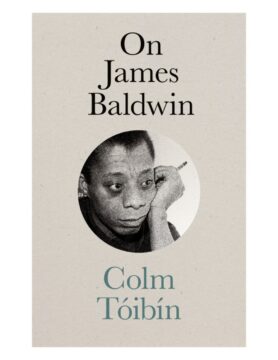 Hence the absurdity of the bland assumption among some writers of the younger generation that Baldwin would embrace the modern idea of intersectionality. Despite his ready admission that he was thrice challenged—Black, queer, and disadvantaged (at least initially!)—Baldwin’s core philosophy was the essential unity of humanity, “his rejection of all labels and fixed notions of identity as ‘myths’ or ‘lies,’” as his biographer Magdalena J. Zaborowska has written, and she provides ample evidence for this judgment. Art, Baldwin stated, “has its roots in the lives of human beings: the weakness, the strength, the absurdity. . . . It belongs to all of us, and this includes our foes, who are as desperate and as vacuous and as blind as we are and who can only be as evil as we are ourselves.” “[A] victim,” he wrote, “may or may not have a color, just as he may or may not have virtue.” Baldwin’s realization that suffering does not create virtue and that victims are not necessarily good people was, as he knew, a “difficult . . . unpopular notion, for nearly everyone prefers to be defined by his status, which, unlike his virtue, is ready to wear.”
This is even more true today, when the intersectional grid draws rigid lines between “oppressor” and “oppressed” that Baldwin, despite the animus against white America that ballooned as he aged, was far too subtle a thinker to accept. His friendships with Jews, whites, Communists, and atheists at DeWitt Clinton High School in the Bronx made him suspicious of easy racial categorization, and “[t]he rich mix of his white, Black, Jewish, leftist, southern, and queer teachers and mentors helped him craft the sophisticated literary tools he used to reach that understanding,” as Zaborowska says.
more here.
Enjoying the content on 3QD? Help keep us going by donating now.