
Anil Ananthaswamy in Quanta:
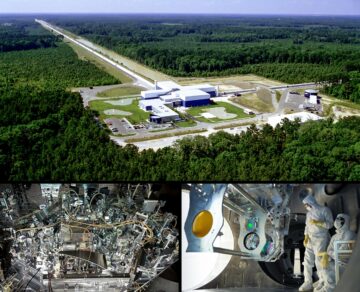 It took months of effort to understand what the AI was doing(opens a new tab). It turned out that the machine had used a counterintuitive trick to achieve its goals. It added an additional three-kilometer-long ring between the main interferometer and the detector to circulate the light before it exited the interferometer’s arms. Adhikari’s team realized that the AI was probably using some esoteric theoretical principles that Russian physicists had identified decades ago to reduce quantum mechanical noise. No one had ever pursued those ideas experimentally. “It takes a lot to think this far outside of the accepted solution,” Adhikari said. “We really needed the AI.”
If the AI’s insights had been available when LIGO was being built, “we would have had something like 10 or 15% better LIGO sensitivity all along,” he said. In a world of sub-proton precision, 10 to 15% is enormous.
More here.
Enjoying the content on 3QD? Help keep us going by donating now.