
Ed Schad interviews Takashi Murakami at The Brooklyn Rail:
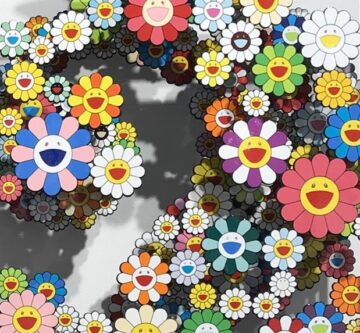 Rail: We have spoken in the past of the status that a copy has in Japan, that, for instance, it is not unusual or out of place to see a copy of a national treasure standing in for an original work in a museum. Practically, most treasures are too fragile and too old to be on continuous view, but it is also more than that, more like the copy can transmit what the original is meant to transmit. This bothers us in the West, but less so in Japan. We have also spoken of a copy as a way of both affirming and breaking from a teacher. Your idea of a person vicariously reaching back to Matabei through your work seems in this vein.
Murakami: Matabei captured all the details of people’s different jobs during a moment in the city of Kyoto, the landscape of the town, even more details than have been recorded in writing. So it really was just like I was using someone else’s genius to boost my work. It is difficult to do a copy of old works like these because so much of the original tints and paintings have rubbed off and a lot of the details are missing. If you fill in too many details or imitate too many of the missing lines, then it seems to become your own work and it has less to do with the older artist. However, two to three years ago I started to use AI to recreate those details more faithfully and get much closer to the older artist’s work. This use of AI to fill in the details of an older work made it possible later for me to work with Hiroshige’s prints when the Brooklyn Museum asked me.
more here.
Enjoying the content on 3QD? Help keep us going by donating now.