
Webb Wright in Quanta:
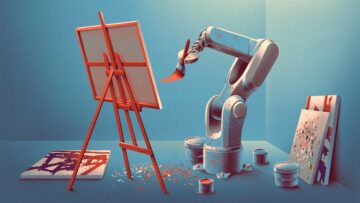 To generate images, diffusion models use a process known as denoising. They convert an image into digital noise (an incoherent collection of pixels), then reassemble it. It’s like repeatedly putting a painting through a shredder until all you have left is a pile of fine dust, then patching the pieces back together. For years, researchers have wondered: If the models are just reassembling, then how does novelty come into the picture? It’s like reassembling your shredded painting into a completely new work of art.
Now two physicists have made a startling claim: It’s the technical imperfections in the denoising process itself that leads to the creativity of diffusion models. In a paper(opens a new tab) that will be presented at the International Conference on Machine Learning 2025, the duo developed a mathematical model of trained diffusion models to show that their so-called creativity is in fact a deterministic process — a direct, inevitable consequence of their architecture.
By illuminating the black box of diffusion models, the new research could have big implications for future AI research — and perhaps even for our understanding of human creativity.
More here.
Enjoying the content on 3QD? Help keep us going by donating now.