
Dennis Duncan in the Washington Post:
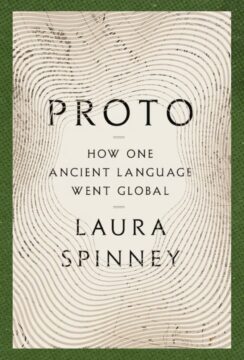 If we think of languages as belonging to families, this is like finding out that an acquaintance is really a distant cousin: It points to a shared ancestor, a unity — and a divergence — somewhere in the past. What would it mean for those cultural origin stories — for Who We Are — to speak not of European but of Indo-European? “Of what ancient and fantastic encounters were these the fading echoes?” asks Laura Spinney in her latest book, “Proto: How One Ancient Language Went Global.”
There are about 7,000 languages spoken in the world today; they can be divided into about 140 families. Nevertheless, the languages most of us speak belong to just five: Indo-European, Sino-Tibetan, Niger-Congo, Afro-Asiatic and Austronesian. And of these, Indo-European and Sino-Tibetan (which includes Mandarin) are the biggest. As Spinney notes, “Almost every second person on Earth speaks Indo-European.”
More here.
Enjoying the content on 3QD? Help keep us going by donating now.