
Michael Le Page in New Scientist:
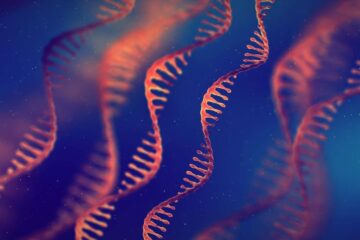 The goal of understanding how inert molecules gave rise to life is one step closer, according to researchers who have created a system of RNA molecules that can partly replicate itself. They say it should one day be possible to achieve complete self-replication for the first time.
RNA is a key molecule when it comes to the origins of life, as it can both store information like DNA and catalyse reactions like proteins. While it isn’t as effective as either of these, the fact that it can do both means many researchers believe life began with RNA molecules that were capable of replicating themselves. “This was the molecule that ran biology,” says James Attwater at University College London.
But creating self-replicating RNA molecules has proved difficult. RNA can form double helices like DNA and can be copied in the same way, by splitting a double helix in two and adding RNA letters to each strand to create two identical helices. The problem is that RNA double helices stick together so strongly that it is hard to keep the strands separate for long enough to allow replication.
Now, Attwater and his colleagues have found that sets of three RNA letters – triplets – bind strongly enough to each strand to prevent this rezipping.
More here.
Enjoying the content on 3QD? Help keep us going by donating now.