
Barry Schwabsky at The Point:
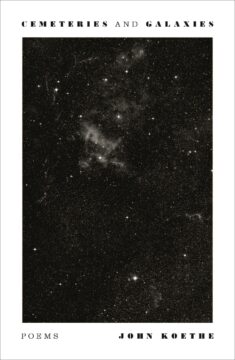 Koethe’s taste for self-contradiction or self-revision, and for rambling free-associative structures of “meditation gone awry” (as he puts it in the poem “Naturalism”) that move around in strange eddies before circling back to some revised perception of their starting point, may seem surprising in a poet whose day job has been in a philosophy department, where logical consistency and a rigorous organization of argument are valued. But then this is the philosopher-poet who once proclaimed, flatly, “I don’t like poems about philosophy.” His poetry seems to be the place for everything philosophy doesn’t know what to do with, for what in “Against Materialism” he calls, “Things so commonplace it’s easy to forget how strange they are” but which “Make up the furniture of the world, and if none of them pass muster metaphysically, / So what?”
That doesn’t mean Koethe forbears to mention or quote philosophers classical (Kant, Hume, Berkeley) or contemporary (Donald Davidson, Derek Parfit and “the greatest moral philosopher since Kant,” as he calls the eponymous subject of the poem “John Rawls et al.”), discuss familiar philosophical themes and topics—appearance vs. reality, the existence of God (he doesn’t buy it, though his upbringing was religious)—or recount episodes from his professional life in philosophy, such as the doctoral defense in which Rawls dismissed one of the other examiners’ objections and then invited the young Koethe for a drink, “which I declined.”
more here.
Enjoying the content on 3QD? Help keep us going by donating now.