
Ian Leslie at Literary Hub:
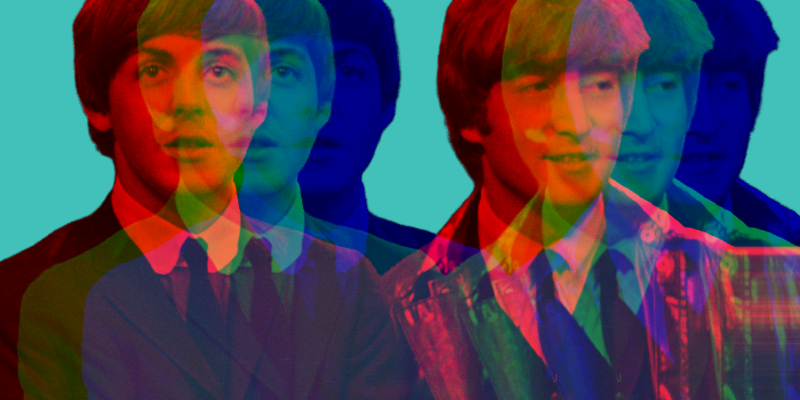 In the early months of 1966, whenever Paul McCartney sat down at a piano, wherever it was, he would start tinkering with a song he called “Miss Daisy Hawkins.” From the moment he found its first five syllabic notes, the song seems to have found its themes: loneliness, futility, the end of life. McCartney was twenty-three. Without discussing it, both John Lennon and Paul came back from their break with songs about death, written from a detached, omniscient perspective.
In “Tomorrow Never Knows” John dispenses instruction from the mountaintop. In two minutes, “Eleanor Rigby” captures the entire lives of two individuals in a series of stark images. Musically, both songs are stripped down to a few parts in order to distill and intensify some essence. “Eleanor Rigby” confines itself to a narrow melodic range and the song has minimal harmonic development: like “Tomorrow Never Knows,” it alternates between just two chords.
Set in a minor key, its tightly wound, almost claustrophobic verse plays out over an accompaniment—a string section arranged by George Martin—that sticks close to the tonic, except when the cellos burst into a galloping run up the scale. This section is joined to a refrain in which the singer asks where all the lonely people come from while the cellos play a Bach-style descending line.
More here.
Enjoying the content on 3QD? Help keep us going by donating now.