
John Banville at the New Statesman:
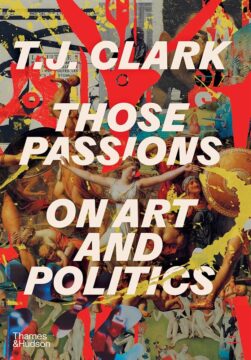 In his introduction, Clark poses a more immediate question: “Shouldn’t we judge political art by its effects, not its beauty or truth?” Leaving aside the second clause, we find two questionable assertions implicit in the first: namely, that art can be political and that it can have an effect. In this context, he imagines the reader wondering why his book “makes room for Matisse and Jackson Pollock,” two artists who “reached the conclusion, in practice, that opinions had to be what art annihilated if it was to survive”. Their stance is one that Clark accepts: “The blankness was essential. It was reality as they lived it.”
And is not that blankness –“inutility” was the word Vladimir Nabokov favoured – the very essence of art? Surely we go to Velázquez’s Las Meninas, to Piero della Francesca’s Sansepolcro Resurrection, to Bonnard’s baigneuses series, not to be told things, not to be persuaded of this or that political solution to life’s problems, but to have an intensified sense of what it is to be alive in this exquisite and appalling world into which we have been thrown, and from which after a little interval we shall be summarily ejected.
more here.
Enjoying the content on 3QD? Help keep us going by donating now.