
John Pavlus in Quanta:
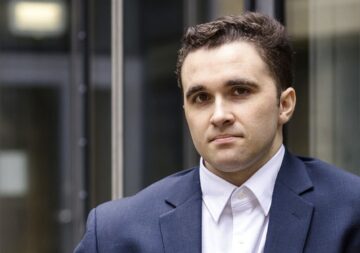 He began studying machine learning, eventually fusing it with his doctoral research in astrophysics at Princeton University.
Nearly a decade later, Cranmer (now at the University of Cambridge) has seen AI begin to transform science, but not nearly as much as he envisions. Single-purpose systems like AlphaFold can generate scientific predictions with revolutionary accuracy, but researchers still lack “foundation models” designed for general scientific discovery. These models would work more like a scientifically accurate version of ChatGPT, flexibly generating simulations and predictions across multiple research areas. In 2023, Cranmer and more than two dozen other scientists launched the Polymathic AI(opens a new tab) initiative to begin developing these foundation models.
The first step, Cranmer said, is equipping the model with the scientific skills that still elude most state-of-the-art AI systems.
More here.
Enjoying the content on 3QD? Help keep us going by donating now.