The Scopes “Monkey trial”, Part 1: Issues, Fact, and Fiction
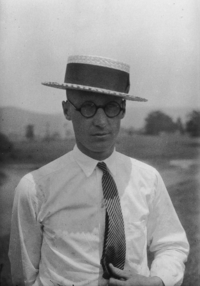
by Paul Braterman What is the purpose of this examination? We have the purpose of preventing bigots and ignoramuses from controlling the education of the United States, and that is all. Dayton Courthouse today Inherit the Wind, the prism through which the public sees the Scopes Trial, is a travesty. William Jennings Bryan, who prosecuted…
Why the sea squirt eats its brains out
by Paul Braterman Good to eat, in traditional Mediterranean and oriental cuisines. Good food for farmed fish, not that they (the fish, I mean) really have much choice in the matter. Good as a source of possible biofuels. And now good for almost a million pounds of research funding. Your sister, the sea squirt, actual…
In Dublin, beheading expositor speaks freely, potential victim censored
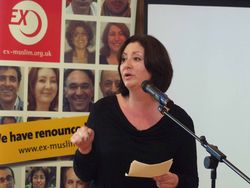
by Paul Braterman “And if he insists on being killed … then at the end, by the authority of the ruling body, it's done.” Sheikh Kamal El Mekki, who expounds with apparent approval the law on beheading ex-Muslims, spoke this February at Trinity College Dublin. Maryam Namazie, equal law campaigner, ex-Muslim and prominent critic of…
Reviewed: The Incredible Unlikeliness of Being; Grandmother Fish
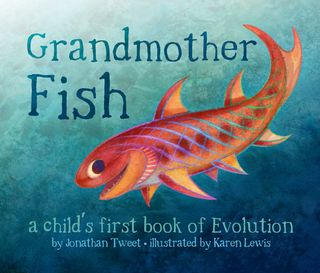
by Paul Braterman In my last post, I said that the right way to undermine creationism is to promote appreciation of the science of evolution, by presenting it in ways that are engaging, enjoyable, and above all personal. In this post, I review two more books that succeed in doing this; Alice Roberts' The Incredible…
Time turned to Stone; Part 2: The Giants’ Causeway, time as process
by Paul Braterman My previous post here described Siccar Point, where an 80,000,000 year time gap is present between near-vertical tilted strata, and their roughly horizontal overlay. This gap corresponds to the formation and subsequent erosion of fold mountains thrown up when Iapetus, precursor to the modern North Atlantic, closed. Today's post is (mainly) about…
Time Turned to Stone, Part 1: Time as interval
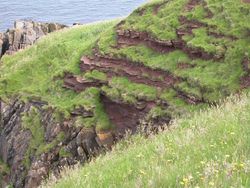
by Paul Braterman I have recently visited two very different sites where time is turned to stone, where just looking at the rocks shows the passage of enormous lengths of time, dwarfing all of recorded human history. At the first site, the rocks I was looking at were ancient sediments, with the clearest possible evidence…
Socrates, evolution, and the word “theory”
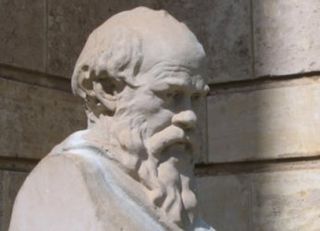
by Paul Braterman What's wrong with this argument? More than you think! All men are mortal. Socrates is a man. Therefore Socrates is mortal. It's perfectly valid, meaning that if the premises are true, the conclusion must also be true. Despite this, as Bertrand Russell explained very clearly many years ago,[1] the argument is almost…
Science and the Supernatural (II): Why we get it wrong and why it matters
by Paul Braterman Science, some say, rejects supernatural explanations on principle; this is called intrinsic methodological naturalism (IMN). In Part I I argued, following the work of Boudry et al. (here, here , and here), that this strategy is misguided. Here I go into more detail, using actual past and present controversies to illustrate the…
The natural, the supernatural, and the nature of science
by Paul Braterman Science, it is often said, is restricted in principle to the search for natural causes. Is this a fundamental rule for doing science? Or merely a useful procedural guide, derived from experience? Is it even true? Or meaningful? Does it matter? These questions are addressed in an important series of papers in…
Isn’t one law enough for England’s Law Society?
by Paul Braterman That's my friend Ramin Forghani from Iran, standing next to Maryam Namazie, carrying a placard outside the Law Society offices in London. He knows that what he is doing, and what he is about to say, could get him killed. Imagine that you want to write your will according to sharia law,…
Antifragility and Anomaly: Why Science Works
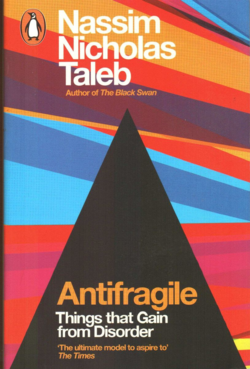
by Paul Braterman Scientific theories are antifragile; they thrive on anomalies. Some things are fragile – they break. Some are robust – they can withstand harsh treatment. But the most interesting kind are antifragile, emerging strengthened and enriched from challenges. Whatever does not kill them makes them stronger. Science is as successful as it is,…
The Deep Roots of Intelligent Design Creationism (Part II of Kelvin, Rutherford, and the Age of the Earth )
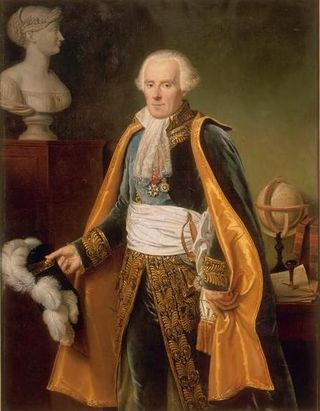
by Paul Braterman Last November, creationist objectors in Texas tried yet again to sabotage the state's textbook adoption process. One of the objections concerned the age of the Earth, using the long refuted cooling argument that goes back to Kelvin in the 1860s. An online conversation about the matter directed me to the real flaw…
Kelvin, Rutherford, and the Age of the Earth: I, The Myth
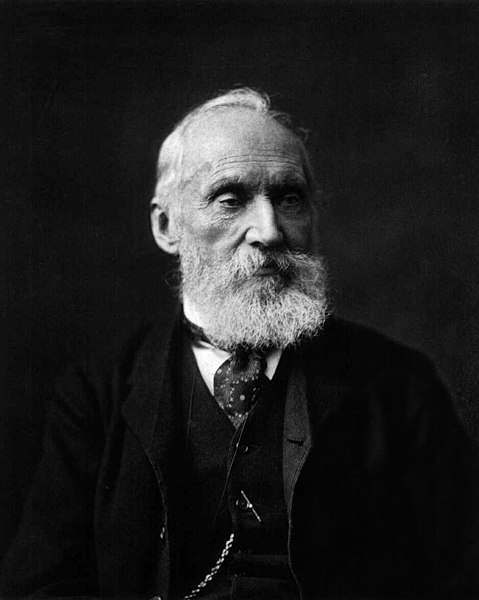
by Paul Braterman Lord Kelvin (Smithsoinian Instituion Libraries collection) Kelvin calculated that the Earth was probably around 24 million years old, from how fast it is cooling. Rutherford believed that Kelvin’s calculation was wrong because of the heat generated by radioactivity. Kelvin was wrong, but so was Rutherford. The Earth is indeed many times older…
Credit where none is due; creationist colleges and courses
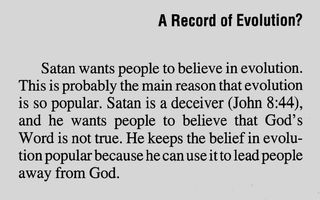
by Paul Braterman I am browsing school science textbooks published and marketed by an influential and nationally accredited US university. Here is what I find.[1] Satan wants people to believe in evolution. This is probably the main reason that evolution is so popular. Evolution relies on processes that cannot be observed, therefore it isn’t a…
The Problem with Pandas
by Paul Braterman Rotation of back paw allows red panda to descend head first down tree. Taken at the Cincinnati Zoo. Photo by Greg Hume through Wikipedia Keywords: sex, violence, baby swapping, mistaken identity, DNA testing, international relations, Richard Nixon, Viagra, Sixth Mass Extinction Same thumb, different family Names can be deceptive. The red panda…
Darwin, God, Alvin Plantinga, and Evolution (Part II)
by Paul Braterman Professor Plantinga lecturing, 2009 Prof Alvin Plantinga, of Notre Dame University, is perhaps the most distinguished critic of current views on evolution. He claims that if our conceptual apparatus is simply the product of naturalistic Darwinian evolution, it will generally give rise to unreliable results. From this premise he argues that it…
Darwin, God, Alvin Plantinga, and Evolution
by Paul Braterman Watercolour, Darwin after return from The Beagle, by George Richmond Charles Darwin regarded our minds, like our bodies, as the products of undirected evolution. He therefore considered them unreliable on topics vastly more abstruse than the experiences that had shaped them. Alvin Plantinga claims that minds produced by undirected evolution could not…
Creationism as conspiracy theory – the case of the peppered moth
Addendum: On the day this item was posted, a school board member in Nebraska used slides of Well’s Icons of Evolution to argue that the school should teach “the evidence for and against neo-Darwinian evolution;” details here and here. by Paul Braterman Comparison of carbonaria and typica mounted against post-industrial treetrunk, 2006. Licenced under GFDL…